I'm not an agency. I replace it.
The creative industry is changing rapidly. Communication has become continuous, AI is reshaping the work itself, and a new kind of creative partner is emerging.
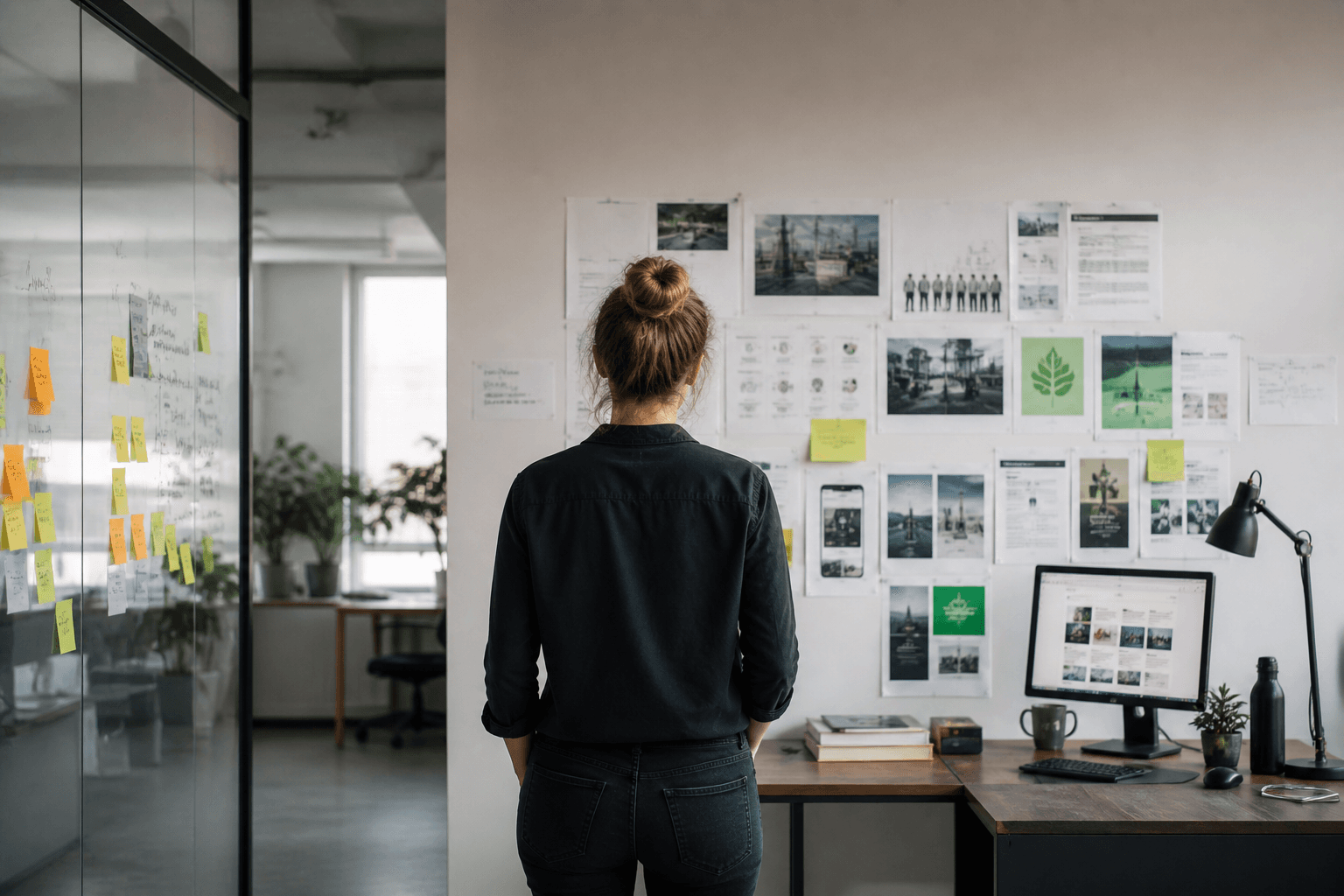
The creative industry is changing rapidly. For decades, companies worked with the same model: hire an agency, brief the team, wait for strategy, concepts, presentations and execution. For a long time, that worked perfectly well.
But today, organisations move faster than traditional creative structures were designed for. Communication has become continuous. Markets change weekly. Employer branding, internal communication, social content, recruitment campaigns and brand positioning all happen at the same time.
Especially in sectors like energy, utilities and technical services, companies can no longer afford slow communication processes with too many layers and too much overhead. At the same time, technology is fundamentally reshaping the creative process itself.
AI is reshaping creative work
AI tooling has accelerated idea development, copywriting, visual exploration, research and production workflows at an incredible pace. Tasks that previously required large teams and long timelines can now move significantly faster.
That does not mean agencies disappear overnight. But it does mean the role of creativity is shifting. The value is moving away from pure production capacity and toward:
- →strategic thinking
- →communication direction
- →storytelling
- →creative leadership
- →speed of execution
- →flexibility
The real challenge is no longer: “Who can produce the most?”
Who understands the problem fastest and builds the right creative setup around it?
The rise of flexible creative ecosystems
Many of the best creatives no longer work inside traditional agency structures. Designers, strategists, copywriters, filmmakers, AI specialists and developers increasingly work independently and internationally.
This creates a completely new model. Instead of maintaining large permanent organisations, creative teams can now be assembled dynamically around the actual challenge. Smaller. Smarter. More specialised. More flexible.
The result:
- →faster execution
- →lower overhead
- →direct collaboration
- →stronger connection between strategy and execution
- →more adaptability during projects
Communication has become more human
Another major shift is happening inside organisations themselves. Communication is no longer only about advertising or campaigns. Companies are dealing with:
- →labour shortages
- →cultural change
- →energy transition
- →internal alignment
- →employer branding
- →employee engagement
- →visibility and trust
That requires communication that is closer to the organisation itself. Not only external campaigns, but internal understanding. Not only branding, but culture. Not only creativity, but connection.
A new role emerges
These changes are creating a different type of creative partner. Someone who combines:
- →strategy
- →communication
- →creativity
- →execution
- →AI workflows
- →flexible specialist networks
Not necessarily as a traditional agency, but as a communication and creative operator that builds the right ecosystem around each challenge. Less focused on hierarchy. More focused on movement. Less focused on structure. More focused on impact.
The future will be hybrid
Traditional agencies will continue to exist. Alongside them, a new generation of smaller, highly connected creative operators is emerging: people and networks that move faster, stay closer to organisations and combine human creativity with AI-powered workflows.
Not bigger. Smarter. And that is exactly where the future of creative work is heading.
Is your organisation feeling the limits of the traditional agency model?
Send a brief — let's see what a flexible creative setup could look like for you.